
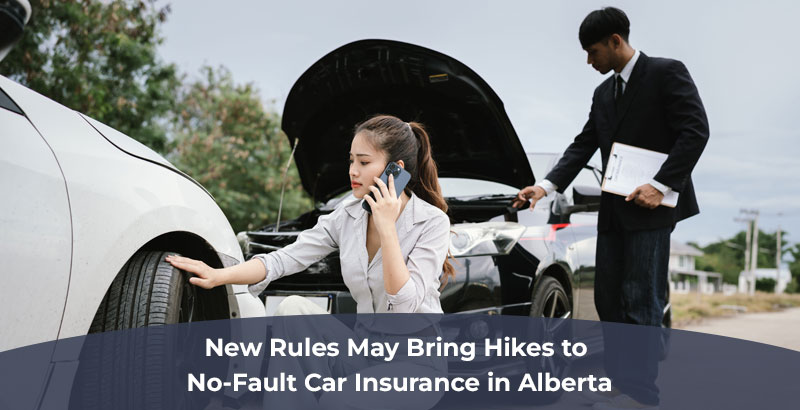
Alberta’s auto insurance framework is about to undergo significant changes. According to the provincial government’s proposal, insurance companies have to increase premiums up to 7.5% annually. Plus, they can allow transition to a no-fault insurance system for injuries sustained in car accidents.
The province’s ‘care-first’ system looks to make treatment faster and decrease legal costs. However, there are concerns that it will restrict driver’s rights and access to legal support.
Let’s take a look to see what this could mean for you or someone near you involved in a serious car accident error.
What is being proposed?
- Increases of up to 7.5% annually: Currently, insurers must seek approval for rate changes and are limited to about 3.7%. The proposed regulations would permit increases of 7.5% any year even with drivers who have clean records. This increase is to counteract increasing costs for extreme weather events, increase costs for extreme weather events, increase in claim payouts, and inflation.
- No-Fault Car Insurance Model: The most major change will be the transition to a no-fault car insurance model. Under this model, you can experience:
- You will seek recovery for your injuries through your own provider, regardless of who was at fault; in the accident.
- Claims for pain and suffering or additional compensation will be mostly limited.
- In limited and exceptional circumstances, you will be able to bring a lawsuit against the other driver. Ex, if they are at fault criminally (impaired driving), if your medical expenses exceed the caps put into place.
- The goal of the no-fault system is to help reduce backlogs in litigation and get people the necessary medical support faster.
- New Appeal Process: An Independent appeal process is intended to resolve disputes between claimants and insurers. The appeal process would be independent of the court in most cases. It provides a more direct way to challenge determinations made by the insurer.
- Implementation Timeline: The complete no-fault approach is anticipated to reach implementation by January 2027. In the meantime, however, insurers could start introducing the proposed premium increases as early as 2025.
What Is No-Fault Vehicle Insurance?
No-fault vehicle insurance is a structure in which each driver’s own insurance company is responsible for their own client’s injury expenses, irrespective of who caused the accident.
The intention is to simplify the process, speed up compensation, minimize legal costs, and create expected and uniform claims. It would, however, limit your right to sue an at-fault party even if their negligence resulted in severe injury.
Alberta would join other provinces such as Ontario and Quebec, which have implemented variations of this type in their own no-fault models.
Advantages and Disadvantages for Alberta Drivers
Pros
- Faster Access to Treatment: Injured drivers may have earlier access to medical treatment without waiting for court decisions.
- Lower Legal Costs: Reduced litigation means fewer legal fees and straightforward claims.
- Common Treatment and Compensation: Compensation will be standard based on the type and severity of injury.
Cons
- Less Right to Sue: Many drivers will no longer have the ability to sue and seek additional compensation.
- More Premiums: Especially in transitional years, insurance may be able to increase insurance premiums at a greater percentage.
- The end of litigation: Without civil recourse, some worry insurers may not fully pay claims or dispute any reasonable expense.
How this affects your legal rights
Under a no-fault system, your right to file a civil damage suit will be limited. This means that if you were seriously injured in a motor vehicle accident caused by someone else, you may not be able to obtain any damages above the “fixed benefit” maximums set by the province.
There are exceptions. You may be able to sue if:
- The other driver was charged with an offense (e.g., DUI, reckless driving).
- Your expenses exceed the maximum payouts.
- You have a permanent injury or injury resulting in a long-term impairment (subject to different tests).
This highlights the need for legal assistance more than ever, especially when it comes to arguing whether an expense is “out-of-schedule.”
Common Queries That You May Want To Know Later
- What is no-fault insurance?
No-fault insurance means that every driver deals with their own insurance company regarding injury claims irrespective of who caused the accident. In most cases, you will not be able to sue the other driver who was at fault.
- Will I be able to sue for pain and suffering?
You will only be able to sue for pain and suffering in very limited circumstances, such as cases of criminal negligence or extraordinary amounts of out-of-pocket expenses that are not covered by the scheduled benefits.
- Will it raise my insurance premium?
It may. The proposed changes would permit rates to be increased annually by no more than 7.5%, even for drivers who have maintained clean records.
- Does this affect existing claims?
Not at this time. The proposed changes would only apply to claims made after the new system comes into effect.
- Will I still need a car accident lawyer even if the system is no-fault?
Yes, a car accidents lawyer has enough experience to handle the situation wisely and avoid disputes. Also, help you to gain the claim benefits.
Consult with NKS Injury Legal For More Guidance
Alberta’s transition to a no-fault car insurance system is intended to expedite the claims process but is probably creating additional restrictions on drivers’ rights and increased insurance premiums. If you need assistance with navigating this new automotive insurance process, please consult a Car Accident Lawyer in Calgary. The lawyers of NKS Injury Legal Immigration are focused on protecting your rights and ensuring you received the benefits you are entitled to.
